
BreakingBreaking News
Loading latest breaking news...
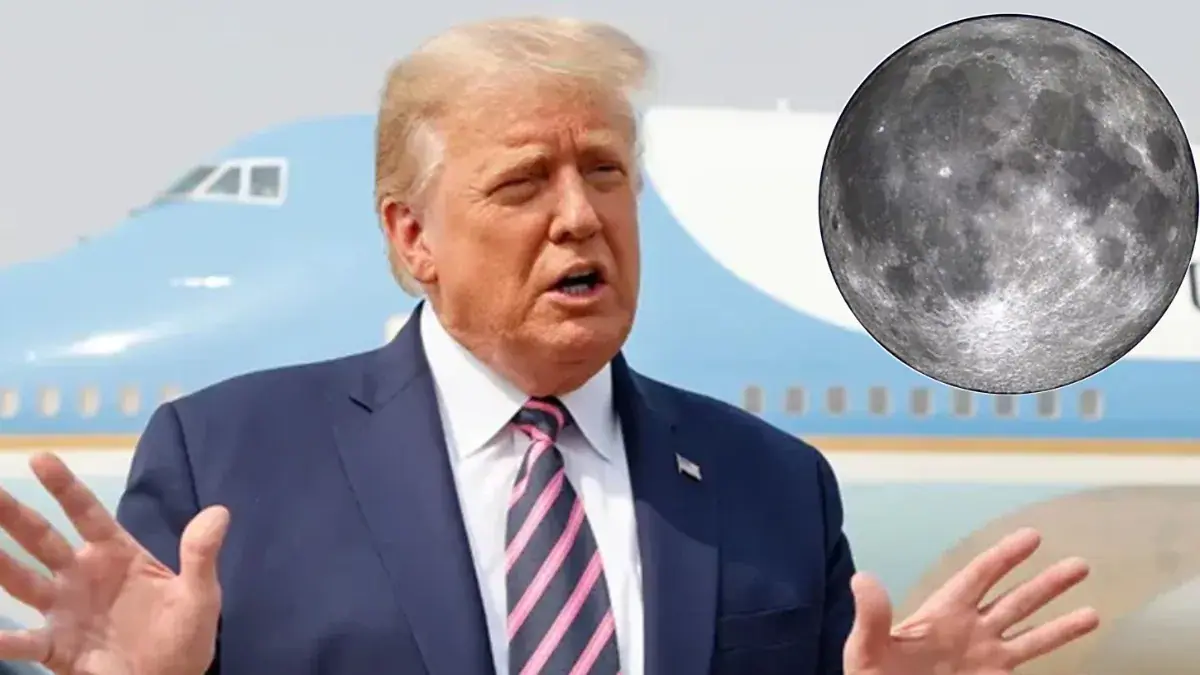
মার্কিন প্রেসিডেন্ট ডোনাল্ড ট্রাম্প সামাজিক যোগাযোগমাধ্যম ট্রুথ সোশ্যালে চাঁদের ওপর যুক্তরাষ্ট্রের মালিকানা ইঙ্গিত করে একটি পোস্ট করেছেন। তবে আন্তর্জাতিক মহাকাশ আইন অনুযায়ী কোনো দেশই চাঁদের সার্বভৌমত্ব দাবি করতে পারে না। গত ৬ সেপ্টেম্বর ২০২৬ তারিখে ট্রাম্প ট্রুথ সোশ্যালে মার্কিন পতাকার পাশাপাশি "দ্য মুন ইজ আওয়ার্স" (চাঁদ আমাদের) লিখে একটি ছবি পোস্ট করেন। এরপরই বিভিন্ন সামাজিক মাধ্যমে আলোচনা শুরু হয় যে যুক্তরাষ্ট্র সত্যিই চাঁদকে নিজেদের ভূখণ্ড ঘোষণা করেছে কি না। ফ্যাক্ট চেক দেখা গেছে, ট্রাম্পের পোস্টটি আসল হলেও এর পেছনে কোনো আনুষ্ঠানিক আইনি ঘোষণা বা নির্বাহী আদেশ ছিল না। জাতিসংঘের 'আউটার স্পেস ট্রিটি' (বহিঃমহাকাশ চুক্তি) অনুযায়ী কোনো দেশ চাঁদের মালিকানা দাবি করতে পারে না। চুক্তির ২ নম্বর অনুচ্ছেদে স্পষ্টভাবে উল্লেখ রয়েছে, চাঁদ বা অন্যান্য মহাজাগতিক বস্তুকে সার্বভৌমত্ব দাবি করে, ব্যবহার বা দখল করে বা অন্য কোনো উপায়ে কোনো রাষ্ট্র নিজের অধিকারভুক্ত করতে পারবে না। যুক্তরাষ্ট্র এই চুক্তির অন্যতম প্রতিষ্ঠাতা ও স্বাক্ষরকারী দেশ। ফলে এই চুক্তি ভঙ্গ করলে দেশটিকে আন্তর্জাতিক নিষেধাজ্ঞাসহ বিভিন্ন রাজনৈতিক ও অর্থনৈতিক পরিণতির মুখে পড়তে হতে পারে। এ বিষয়ে জাতিসংঘের মহাকাশ বিষয়ক দপ্তর (ইউএনওওএসএ)-এর এক মুখপাত্র জানিয়েছেন, কোনো সামাজিক যোগাযোগমাধ্যমের বক্তব্য চুক্তির আওতায় চাঁদের আইনি অবস্থান পরিবর্তন করে না। কোনো বক্তব্য আন্তর্জাতিক আইনের লঙ্ঘন কি না, তা নির্ভর করে এর আইনি চরিত্র, প্রেক্ষাপট ও উদ্দেশ্যের ওপর। যুক্তরাষ্ট্র ছাড়াও চাঁদ স্পর্শ করা অন্য চার দেশ চীন, রাশিয়া, ভারত ও জাপান এই চুক্তিতে স্বাক্ষর করেছে। ফলে ট্রাম্পের এই ইঙ্গিত আন্তর্জাতিক মহলে স্বীকৃতি পাওয়ার সম্ভাবনা নেই বললেই চলে। তবে এই বক্তব্য ট্রাম্প প্রশাসনের মহাকাশ নীতির সঙ্গে সংগতিপূর্ণ। এর আগে ২০২৫ সালে স্বাক্ষরিত এক নির্বাহী আদেশে ট্রাম্প ২০৩০ সালের মধ্যে চাঁদে স্থায়ী মার্কিন ফাঁড়ি স্থাপন ও পারমাণবিক চুল্লি পাঠানোর লক্ষ্য নির্ধারণ করেছিলেন। এমনকি তার প্রথম মেয়াদে তিনি মহাকাশকে একক আন্তর্জাতিক সম্পদ হিসেবে গণ্য না করে জাতীয় নিয়ন্ত্রণ প্রতিষ্ঠার পক্ষে অবস্থান নিয়েছিলেন।
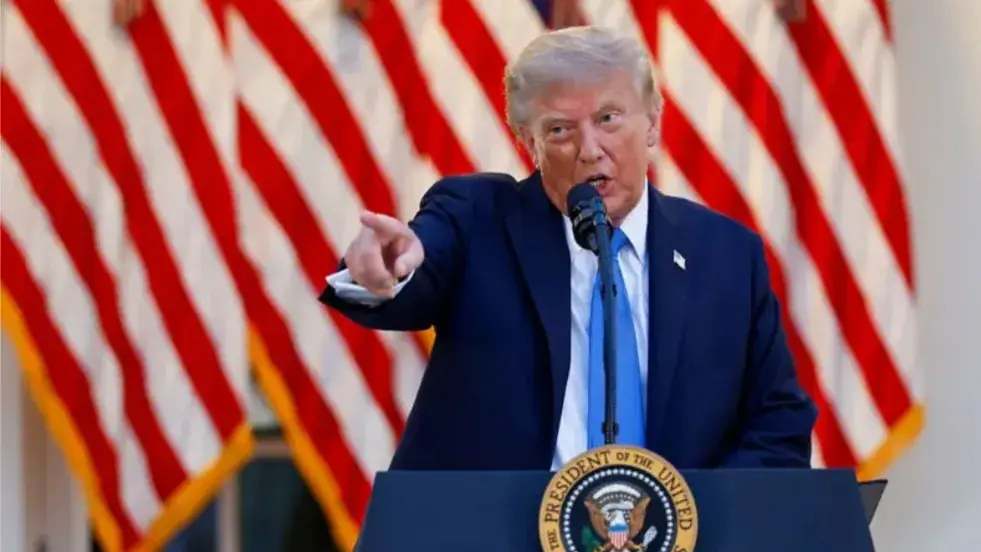
যুক্তরাষ্ট্রের প্রেসিডেন্ট ডোনাল্ড ট্রাম্প বলেছেন, নভেম্বরের মধ্যবর্তী নির্বাচনে রিপাবলিকানরা কংগ্রেসের উভয় কক্ষের নিয়ন্ত্রণ পেলে তিনি প্রত্যেক প্রাপ্তবয়স্ক আমেরিকানকে পাঁচ হাজার ডলার করে অর্থ দেওয়ার প্রস্তাব করবেন। এই পরিকল্পনা বাস্তবায়নে এক ট্রিলিয়ন ডলারেরও বেশি ব্যয় হবে। যুক্তরাষ্ট্রের প্রেসিডেন্টের মেয়াদকালের মাঝামাঝি সময়ে অনুষ্ঠিত দলের প্রথমবারের মতো জাতীয় সম্মেলনে দেওয়া এক ভাষণে তিনি এ প্রস্তাব দেন। পরিকল্পনাটি কীভাবে বাস্তবায়িত হবে বা এর অর্থায়ন কীভাবে করা হবে, সে বিষয়ে তিনি কোনো বিস্তারিত জানাননি। শুধু বলেছেন, এই অর্থ যুক্তরাষ্ট্রের ভেতরেই ব্যয় করতে হবে। ভাইস প্রেসিডেন্ট জেডি ভ্যান্স এই পরিকল্পনাকে ট্রাম্পের শুল্কনীতি থেকে যুক্তরাষ্ট্র সরকারের অর্জিত রাজস্বের সঙ্গে যুক্ত করেছেন। ডেমোক্র্যাটরা এটিকে ‘ফাঁকা প্রতিশ্রুতি’ বলে আখ্যা দিয়েছে এবং অন্যরা প্রশ্ন তুলেছেন, এমন প্রতিশ্রুতি আইনগতভাবে বৈধ বা বাস্তবসম্মত কি না। নির্বাচনী বছরে ভোটারদের ভোটকেন্দ্রে যেতে উৎসাহিত করার আহ্বানের প্রেক্ষাপটে, কোনো মার্কিন প্রেসিডেন্টের পক্ষ থেকে আমেরিকানদের এমন অর্থ প্রদানের প্রস্তাব দেওয়ার ঘটনা সম্ভবত এটাই প্রথম। বর্তমানে প্রায় ২৭ কোটি প্রাপ্তবয়স্ক আমেরিকান রয়েছেন। ফলে প্রত্যেককে পাঁচ হাজার ডলার করে দেওয়া হলে যুক্তরাষ্ট্র সরকারের প্রায় ১.৩ ট্রিলিয়ন ডলার ব্যয় হবে। পরিকল্পনাটি বাস্তবায়নযোগ্য কি না, তা নিয়ে ইতোমধ্যেই প্রশ্ন উঠতে শুরু করেছে। বিশেষ করে এমন সময়ে এই প্রশ্ন উঠছে, যখন যুক্তরাষ্ট্রে পণ্যের দাম বাড়ছে, যার একটি কারণ হিসেবে ফেব্রুয়ারিতে ইরানের সঙ্গে যুক্তরাষ্ট্র ও ইসরায়েলের শুরু করা যুদ্ধকে উল্লেখ করা হচ্ছে।

Following months of intense diplomatic brinkmanship and escalating global humanitarian outrage, the United Nations Security Council (UNSC) has achieved an extraordinary diplomatic breakthrough by unanimously adopting a binding resolution demanding an immediate, permanent ceasefire across the Middle East and the unrestricted establishment of humanitarian corridors into the besieged Gaza Strip. Convening in an emergency plenary session at UN Headquarters in New York, all fifteen permanent and non-permanent member states voted decisively in favor of the resolution, marking a triumphant milestone for international multilateralism. The codified resolution mandates the immediate cessation of all military hostilities under the direct supervision of certified UN observation missions. Crucially, the mandate demands that hundreds of humanitarian aid convoys carrying vital food staples, emergency surgical supplies, clean water purification kits, and fuel be granted unrestricted, round-the-clock transit through the Rafah and Kerem Shalom border crossings without administrative inspection delays. The immediate restoration of power grids, telecommunication conduits, and medical oxygen plants across protected hospitals was designated an unconditional priority. Delivering a passionate address immediately following the vote, UN Secretary-General António Guterres implored international signatories to translate the resolution into immediate ground reality: 'This vote is not merely a diplomatic resolution; it is a sacred lifeline answering the cries of millions of innocent children, women, and civilians caught in catastrophic devastation. The mandate must be enforced without equivocation so life-saving trauma surgery and food relief reach the suffering immediately.' Specialized multilateral relief organizations including the International Committee of the Red Cross (ICRC), the World Health Organization (WHO), and UNICEF announced the mobilization of rapid-response logistics teams. Plans encompass airlifting critically wounded children to specialized trauma centers overseas, reconstructing bombed municipal water grids, and executing mass emergency vaccinations against cholera and polio to prevent catastrophic public health collapse. Global capitals spanning London, Paris, Beijing, and Ankara welcomed the resolution as an indispensable step toward lasting regional stability. Veteran geopolitical strategists emphasized that while an immediate ceasefire stems unspeakable humanitarian bloodshed, the global community must decisively pursue an irreversible, sovereign two-state political framework as the sole sustainable path toward long-term peace in the Middle East.

In an epochal summit designed to preempt existential risks posed by the exponential ascent of frontier artificial general intelligence, senior plenipotentiaries representing over eighty sovereign nations have formally signed the landmark 'Geneva Treaty on Frontier AI Safety and Governance.' Convened jointly under the auspices of the International Telecommunication Union (ITU) and the United Nations, the historic accord establishes the world's first legally binding international regulatory architecture mandating rigorous, independent red-teaming and safety compliance for frontier cognitive models. Central to the treaty's operative clauses is a mandatory licensing threshold: any commercial entity or state research institute training algorithmic architectures utilizing compute clusters exceeding 10^26 floating-point operations must submit unredacted model weights and architectural safeguards to autonomous international safety inspectors. The development of autonomous weapons systems capable of biological agent synthesis or automated critical infrastructure cyber-warfare is permanently designated a crime against humanity under international law. Chief executives and chief scientists from premier artificial intelligence research labs—including OpenAI, Google DeepMind, Microsoft, and Anthropic—publicly endorsed the multilateral pact. Industry leaders noted that universal safety guardrails prevent a perilous 'race to the bottom,' establishing a disciplined foundation where artificial intelligence can safely unlock miraculous breakthroughs in structural biology, automated oncology therapeutics, and climate modeling. To bridge the escalating computational divide between industrialized tech monopolies and the Global South, the treaty establishes a multi-billion-dollar 'Global AI Compute Trust.' Frontline researchers and university scholars across developing nations will receive subsidized cryptographic tokens granting direct access to cutting-edge sovereign supercomputing nodes. Furthermore, to safeguard global democratic integrity against state-sponsored synthetic propaganda, immutable cryptographic provenance watermarks are mandated across all generative audio and video synthesis engines. International tech policy strategists hailed the Geneva Treaty as a 21st-century equivalent of the historic 1957 International Atomic Energy Agency (IAEA) statute. By institutionalizing an independent global AI safety inspectorate, sovereign nations have laid down a coordinated, enforceable perimeter to ensure that artificial intelligence permanently serves human flourishing.

In a momentous infrastructure triumph permanently severing structural dependence on volatile fossil fuels, the European Union has formally energized the transcontinental 'European Green Energy Supergrid.' Utilizing advanced High-Voltage Direct Current (HVDC) submarine transmission spines, the multi-gigawatt cross-border matrix seamlessly interconnects the massive deep-water offshore wind clusters of the North Sea with the high-radiation solar parks of the Mediterranean, officially pushing the share of clean renewable generation across EU electricity grids past an all-time record of 60 percent. Speaking at an energy infrastructure summit in Brussels, the EU Commissioner for Energy celebrated the operational rollout as a definitive declaration of sovereign energy independence. Plentiful storm-driven kinetic wind energy harvested off the coasts of Denmark, Germany, and the Netherlands is routed instantaneously through low-loss subsea interconnections into Central European industrial centers. Simultaneously, surplus midday photovoltaic generation from Spain and Italy is channeled into Scandinavian pumped-storage hydro reservoirs, providing round-the-clock grid stabilization. Energy macro-economists highlighted that the integrated supergrid effectively insulates European industry from geopolitical energy blackmail and volatile overseas liquefied natural gas (LNG) price spikes. The elimination of expensive gas-fired marginal peaking units has driven wholesale European electricity tariffs down by nearly 25 percent, delivering profound cost relief to energy-intensive manufacturing clusters and millions of households. The ecological dividends are staggering. The transnational supergrid offsets approximately 180 million metric tons of greenhouse emissions annually. The milestone positions the European bloc to surpass its statutory 'Fit for 55' emissions reduction obligations two full years ahead of schedule, proving that industrialized high-income economies can rapidly de-carbonize without sacrificing industrial productivity. European Commission leadership revealed that subsequent project phases will construct sub-Mediterranean interconnections linking into solar and green hydrogen production corridors across Morocco and Egypt, positioning the expanded European clean energy nexus as the undisputed global vanguard for the net-zero industrial transition.

In a momentous recalibration of international finance designed to democratize global liquidity clearing and dismantle single-currency hegemony, the expanded BRICS economic bloc has formally ratified and deployed its sovereign blockchain-enabled settlement architecture, dubbed 'BRICS Pay.' Concluding the plenary leaders' summit, heads of state from Brazil, Russia, India, China, South Africa, and newly admitted member nations signed a binding multilateral treaty institutionalizing direct local-currency clearing mechanisms across cross-border commodity and merchandise flows. The newly commissioned financial infrastructure links member central banks directly through an encrypted distributed ledger framework, bypassing Western correspondent banking networks and legacy SWIFT messaging conduits entirely. Bilateral commercial payments settle instantaneously via an authenticated currency basket underpinned by physical sovereign gold and standardized local currency swaps, systematically eliminating excessive currency conversion costs and clearing fees. Addressing world financial media, summit leaders stressed that the non-aligned monetary architecture is designed not as an aggressive financial weapon, but as a defensive bulwark shielding emerging market sovereigns from extra-territorial unilateral sanctions, secondary enforcement freezes, and aggressive interest rate contagion exported by foreign central banks. Democratizing currency clearing fosters an inherently stable, multi-polar trading matrix. Global trade and macroeconomic strategists noted that direct local-currency settlement is already capturing transformative momentum across primary energy, raw mineral, and agricultural food trade routes spanning Eurasia, Africa, and Latin America. As major crude oil exporters settle bilateral energy shipments directly in sovereign currencies, massive institutional liquidity volumes are permanently diversifying away from traditional reserve accounts. The International Monetary Fund (IMF) observed that the deployment of independent multilateral payment architectures accelerates sovereign reserve diversification globally. By fostering seamless inter-operability between national currencies, emerging market sovereigns are building robust macroeconomic buffers capable of withstanding turbulent global economic cycles.

In a seismic technological breakthrough shattering the fundamental thermodynamic and quantum scaling limits of conventional copper-wired silicon semiconductors, an elite international scientific consortium spanning research universities and nanofabrication foundries across the United States, Taiwan, Germany, and Japan has unveiled the world's first commercially viable 'Silicon Photonic Optical Superchip.' Bypassing traditional electron transport through metallic interconnects, the revolutionary architecture routes computational logic entirely via guided coherent photonics, achieving optical data transmission velocities measured in petabits per second. Simultaneously demonstrated before global semiconductor physicists during plenary sessions in Tokyo and Munich, benchmark testbeds revealed that photonic optical computing architectures yield an astounding 30-fold leap in matrix-processing throughput compared to the highest-performing contemporary AI GPUs. Most profoundly, optical light transmission generates near-zero resistive thermodynamic heat, slashing the energy consumption of high-density artificial intelligence computational workloads by an astonishing 90 percent. Foundry titans and hardware pioneers including TSMC, NVIDIA, Intel, and Samsung have finalized comprehensive multi-billion-dollar joint manufacturing treaties to scale high-yield commercial packaging. The rapid deployment of optical microprocessors arrives at an urgent global inflection point: as generative AI infrastructure threatens to overwhelm regional electric grids and consume staggering cooling-water volumes, photonic chips eliminate data-center thermal constraints, paving the way toward truly sustainable zero-carbon hyperscale compute. Beyond artificial intelligence, photonic computing promises transformative leaps across genomic oncology, molecular simulation, and autonomous robotics. Molecular biophysicists noted that optical coprocessors can simulate complex macromolecular folding in minutes rather than months, unlocking bespoke immunotherapy therapeutics. Concurrently, ultra-low-latency real-time spatial processing eliminates autonomous vehicular perception delays, ensuring absolute transport safety. Semiconductor historians and technology futurists heralded the achievement as a monumental paradigm shift comparable to the invention of the solid-state transistor in 1947. Ushering in the post-silicon era of light-speed computing, silicon photonics lays the unshakeable infrastructural foundation for humanity's technological evolution over the coming century.

Recognizing that the vast sea lanes spanning the Indian Ocean and the Bay of Bengal constitute the indispensable logistical arteries for over half of global maritime commerce, senior defense ministers and naval chiefs representing twenty littoral nations have ratified the 'Indo-Pacific Maritime Cooperation and Sea Lane Security Treaty.' Formalized at the International Maritime Security Symposium in Singapore, the multilateral treaty links Bangladesh, India, Indonesia, Malaysia, Australia, and ASEAN coastal partners into a unified naval architecture dedicated to maritime safety and environmental protection. The strategic accord establishes an interoperable Combined Maritime Taskforce to permanently suppress maritime piracy, illicit high-seas narcotics trafficking, and armed maritime robbery across congested chokepoints including the Strait of Malacca and the Andaman Sea. Maritime patrol aviation, unmanned persistent sea-drones, and encrypted satellite-linked Automatic Identification System (AIS) hubs will share real-time telemetry from joint operational command headquarters in Singapore. Crucially, marine ecological conservation constitutes an equal statutory pillar of the treaty. Stringent multilateral covenants mandate immediate maritime interdictions and severe financial penalties against any commercial container vessels or oil tankers illegally discharging untreated bilge oils or hazardous ballast waters into vulnerable coral reef ecosystems and migratory cetacean channels, fully enforcing International Maritime Organization (IMO) clean marine conventions. Global merchant shipping federations and maritime insurers enthusiastically embraced the accord. Executives from the International Chamber of Shipping (ICS) highlighted that verifiable operational security significantly suppresses war-risk insurance premiums and drayage surcharges across primary trade routes, directly translating into lowered container freight rates and easing import cost pressures across global consumer economies. Representing the Bangladesh delegation, senior naval commanders highlighted that defending sovereign maritime borders in the Bay of Bengal directly protects vital national blue economy ventures. The joint naval umbrella safeguards deep-sea fisheries, ensures uninterrupted transit for Bangladesh's burgeoning export cargo fleets, and creates a secure perimeter for offshore energy exploration.

Marking a glorious economic rebirth for 1.3 billion citizens spanning 54 sovereign nations, the African Continental Free Trade Area (AfCFTA) has officially inaugurated full operational integration, backed by harmonized digital customs corridors and tariff-free transcontinental trade. At a celebratory summit hosted at the permanent AfCFTA Secretariat in Accra, Ghana, executive leadership from the African Union and the World Trade Organization (WTO) officially declared the realization of the world's largest contiguous single market by number of signatory states since the founding of the WTO in 1995. The operational launch systematically dismantles tariff barriers across 90 percent of originating manufactured merchandise, agricultural commodities, and raw materials traded internally between African nations. Historically constrained by colonial-era trade friction that left intra-African commerce languishing below 15 percent, the free trade area is projected to drive internal trade shares past 50 percent within five years. Concurrently, the operational Pan-African Payment and Settlement System (PAPSS) allows merchants to settle multi-million-dollar transactions instantly in national currencies, eradicating foreign exchange transaction bottlenecks. Continental industrial engines—encompassing South Africa, Nigeria, Egypt, Kenya, and Ghana—are spearheading massive value-addition manufacturing initiatives. Critical domestic minerals, including cobalt, lithium, bauxite, and platinum, are increasingly refined into electric vehicle battery packs, solar components, and industrial machinery within high-tech domestic manufacturing corridors rather than exported as cheap raw ores, unlocking millions of high-skilled industrial jobs for African youths. World Bank and African Development Bank macroeconomic assessments estimate that full AfCFTA execution will lift over 30 million individuals out of extreme poverty while bolstering median household revenues for an additional 70 million citizens. Unifying fragmented national markets into an integrated $3.4 trillion economic bloc permanently dismantles colonial economic dependency, positioning Africa as a premier commercial magnet for global investments. Major developing economies including Bangladesh, India, and ASEAN partners welcomed the integration as an unprecedented trade and investment frontier. For Bangladesh's private sector, the unified tariff landscape opens lucrative avenues to establish offshore pharmaceutical manufacturing plants, specialized textile spinning facilities, and agricultural processing hubs, cementing an inspiring era of South-South multilateral prosperity.

In a momentous geopolitical and economic reconstruction charter rivaling the post-World War II Marshall Plan, an international coalition comprising the World Bank, the European Union, the G7, and multilateral sovereign development funds has finalized an unprecedented $500 billion 'Green Reconstruction Blueprint for Ukraine.' Concluded at the International Ukraine Recovery Conference in London, heads of state from over fifty nations alongside global engineering conglomerates signed binding investment guarantees to transform Ukraine into a high-tech, digitally integrated, and climate-neutral European democracy. Central to the recovery charter is the foundational principle of 'Build Back Better, Greener, and Smarter.' Rather than reconstructing obsolete Soviet-era carbon-intensive heavy industries, capital allocations will construct advanced decentralized modular nuclear reactors, massive wind turbine complexes, and zero-carbon green hydrogen steel manufacturing plants. Automated de-mining robotics equipped with airborne multispectral LIDAR sensors are immediately deploying across million-hectare agricultural swathes to restore grain exports. Addressing the plenary assembly, President Volodymyr Zelenskyy conveyed deep appreciation to international partners, stating: 'This comprehensive recovery plan is far more than physical rebuilding; it is an enduring testament to democratic sovereignty, civil dignity, and human resilience. We are architecting a modernized European nation that will serve as a shining global vanguard for renewable energy, digital governance, and industrial sustainability.' An independent multilateral audit commission will oversee expenditure transparency. To catalyze private corporate capital, international financial institutions have operationalized sovereign war-risk reinsurance facilities and transparent public-private partnerships. Global engineering leaders including Siemens, General Electric, and Holcim have signed contracts to build high-speed European standard-gauge railway arteries, smart electric distribution rings, and blast-resilient eco-communities to welcome millions of returning displaced families. Geopolitical strategists and historians observed that the $500 billion Green Marshall Plan permanently anchors Ukraine's economic destiny within the Euro-Atlantic institutional framework. Fostering a modern, resilient, and economically diversified Ukraine forms an unshakeable protective fortress guaranteeing the enduring security, ecological transition, and economic stability of the European continent.
In a transcendent triumph for astrophysics and human space exploration, NASA's international Artemis coalition has successfully executed the first end-to-end extraction and electrochemical synthesis of breathable oxygen and liquid hydrogen rocket propellant from sub-surface water ice at the lunar South Pole. Conducted inside the permanently shadowed craters of Shackleton using the autonomous robotic rover VIPER integrated with the In-Situ Resource Utilization (ISRU) processing module, the engineering milestone permanently removes the primary logistical bottleneck impeding permanent human settlement on the Moon. Addressing an international science conference at NASA Headquarters in Washington, mission directors and European Space Agency (ESA) collaborators detailed the breakthrough thermal extraction process. Concentrated solar-thermal mirrors and sub-surface RF heating coils sublimated lunar cryo-ice into water vapor, which was routed through automated catalytic electrolysis stacks to produce pure medical-grade oxygen and cryogenic liquid hydrogen. The synthesized oxygen will sustain lunar habitats, while liquid hydrogen provides high-thrust propulsion for deep-space missions. Delivering the keynote briefing, the NASA Administrator remarked: 'Hauling life-supporting water and rocket propellants out of Earth's deep gravity well was economically unsustainable for permanent planetary habitation. Mastering in-situ resource synthesis fundamentally transforms the human species into a multi-planetary civilization. The Moon is no longer merely a destination for explorers; it is our permanent gateway and industrial fueling depot to Mars and the deep cosmos.' Commercial space flight aerospace contractors, including SpaceX and Blue Origin, are accelerating hardware integration based on the verified ISRU capabilities. Polar launch manifests encompass deploying ultra-lightweight vertical solar arrays along high-elevation 'peaks of eternal light' and installing compact 40-kilowatt Surface Fission Power nuclear reactors, guaranteeing uninterrupted thermal and electrical power through frigid two-week lunar nights. International aerospace legal scholars noted that successful lunar resource synthesis elevates the Artemis Accords as an inspiring charter of peaceful, transparent, and cooperative space exploration. Working in concert with sovereign space agencies across Japan, the United Kingdom, and Canada, human civilization is poised to establish the permanent Artemis Base Camp within this decade, securing an eternal foothold among the stars.
In a momentous constitutional transformation realigning multilateral governance with the multipolar realities of the 21st century, the United Nations General Assembly has achieved unprecedented cross-regional consensus, formally ratifying a comprehensive framework text to expand and democratize the UN Security Council (UNSC). Convening in an extraordinary plenary session at UN Headquarters in New York, member states overwhelmingly endorsed a binding roadmap expanding total council composition from fifteen to twenty-five seats, formally guaranteeing permanent representation to the Global South. The codified reform blueprint directly rectifies historic structural disenfranchisement. Two permanent seats have been designated for the African continent, two for the Asia-Pacific basin, and one for Latin America and the Caribbean, ensuring that regions representing the overwhelming majority of global humanity possess permanent deliberative parity. Furthermore, the framework places historic statutory fetters on the archaic unilateral veto privileges wielded by the permanent five (P5) members, legally nullifying any veto deployment in matters involving mass atrocities, genocides, or catastrophic humanitarian emergencies. Addressing the assembly, the President of the General Assembly celebrated the historic accord as a vital rebirth of global institutional legitimacy: 'The geopolitical world of 1945 has irrevocably passed. A premier international peace arbiter devoid of permanent African or Latin American voices could no longer command moral authority. Today's democratic expansion resurrects the United Nations as an authentically universal forum for sovereign equality and collective security.' Leadership across the G4 coalition—comprising India, Brazil, South Africa, and Japan—alongside the African Union enthusiastically praised the breakthrough. National delegations affirmed that structural representation dismantles decades of unilateral geopolitical coercion, providing a transparent, rules-based arena capable of enforcing peace settlements with authentic global legitimacy. International jurists and geopolitical scholars noted that a democratized Security Council decisively elevates global advocacy for climate justice, sovereign debt restructuring, and equitable resource distribution. Granting frontline developing nations co-equal authority across international peace architecture establishes an enduring foundation for world stability throughout the 21st century.